
Unrest
On losing your mind, and finding it

This unrest has emerged before, but not for some years. I remember the feeling. At twenty, I lost my mind for a while. A year, really. One day in Trinity College Dublin’s Ussher library, a copy of Rawls’ A Theory of Justice slipped from my grip, bruising its spine with a conspicuous thud against the carpeted floor. The words on the page had tipped and trickled away like tiny casualties pitched from a sinking ship. The letters scuttled from view, black as ants. I knew it couldn’t be happening, and yet it was, and no words would yield to my effort.
For a year, every book I tried to read closed itself opaquely to me. I had carried some book or other everywhere since I was big enough to lie on my stomach on a library or book shop floor at three or four years old, yearning to be able to interpret the coded symbols inside. Here, I understood early, is a route out of this, now. Here is a portal to other universes and to knowing how and why, and as I grew older, books became a path to making other selves. To read was to imagine, to choose, and to be free.
When I lost the ability to read, the panic was total. It trapped me inside myself, alone. I took a year out from university and went back to my hometown and my mother’s house under the weight of a paralysing sense of failure. Locked out of my imagination and into my soft, inadequate body, I worked in a bookshop. Each day passed within a sense of despair so complete that I could see no route through. My hope was that if I just stayed near books, one day they would open themselves to me again. I hoped that my mind would stop rejecting the thing it most relied on; stop eating itself. Stop killing me.
Unrest. That gut-simmering, discombobulating precipice. Like a hovering hand, a hammering heart, a hitching breath. Because there’s something. Some change. Some building thing. Some familiar and unsettling vigilance inside you. A wanting, seeking, striving. Some ravenous feeling.
Back then, it was when I started to get better that the unrest made itself known, like proof of life. I emerged from stupor into the sort of intense discomfort you feel when you’ve sat slumped in a chair too long, legs tight and screaming, hips aching, head heavy and foggy and dry. There had been no energy and now suddenly there was too much. It gnawed away at me. Buffeted me about like a mugger. ‘I don’t understand what you want’, I’d think, curled in bed at night as though protecting the soft middle parts of myself from my own furious mind. ‘I’d give it to you if I did, just to make you stop’. I submit. I submit. I submit.
This horrible waking birth eased when the words came back. One day at the shop, I opened a book – I wish I could remember which one, but it’s like trying to remember the details of the first meal you’ve eaten in a week – and the words stayed still and my mind obeyed and my eyes gulped in the text like a starving mouth. A howling animal awoke; an insatiable appetite for words and ideas. A bald, shameful need revealed that I was finally no longer alone inside my own head. No longer a squatter knocking around a derelict house. I was in the world again, and it was too bright and too loud and too vast, and I might swallow it and it might flatten me.
So I know unrest. It augurs something, and that’s frightening. It leans out of what you know and pitches you roughly into the unfamiliar.
A friend asked me recently about my childhood, which I don’t think about very often these days. They asked whether I carry my past in the present or feel it’s in the far distance, behind some line I’ve long since imposed. I was thrown by the question and replied that my insides don’t match my outside. It was a child’s answer. What I meant is that the past creates our capacity to act in the present. It cannot be gone because it made us. Under pressure or uncertainty, its hot breath beads wetly on the back of your neck. It reemerges as context, not for what will happen next but for what you are capable of knowing. If you have a root, it lies in that past somewhere. Excise it and you don’t exist.
So here it is again, unrest. This time, it visits without the emergence from madness, which is a relief. It’s an intensity that has been dormant or maybe gone. It wants something. I don’t know what. It seeks change or maybe signals one that has already happened. This is inconvenient.
‘You need to take psychedelics’, says my friend who believes psychedelics fix everything. ‘You need to go to the gym more’, says my gym-obsessed friend. ‘You need to read this book’, says my bookish friend. We seek solutions to palliate the discomfort. To shortcut it, solve it, tear it from our bodies and fling it as far from us as possible. Anything but sit in it as it hurts us. This unrest is profoundly uncomfortable. It shrieks like an infant that cannot be soothed. It offends, deafens, calls out in constant, baffling supplication – ‘it can’t any longer be how it was’. It’s a feature of being alive, and of transition periods. Of being afraid or uncertain or of trying to understand.
Climbing out of your skin at two in the morning. You’re a child who can’t yet read, yearning to be able to interpret the coded symbols. Live long enough, and you will simply find yourself occasionally illiterate.
It’s terrifying, but nothing to be afraid of, really. Proof of life.
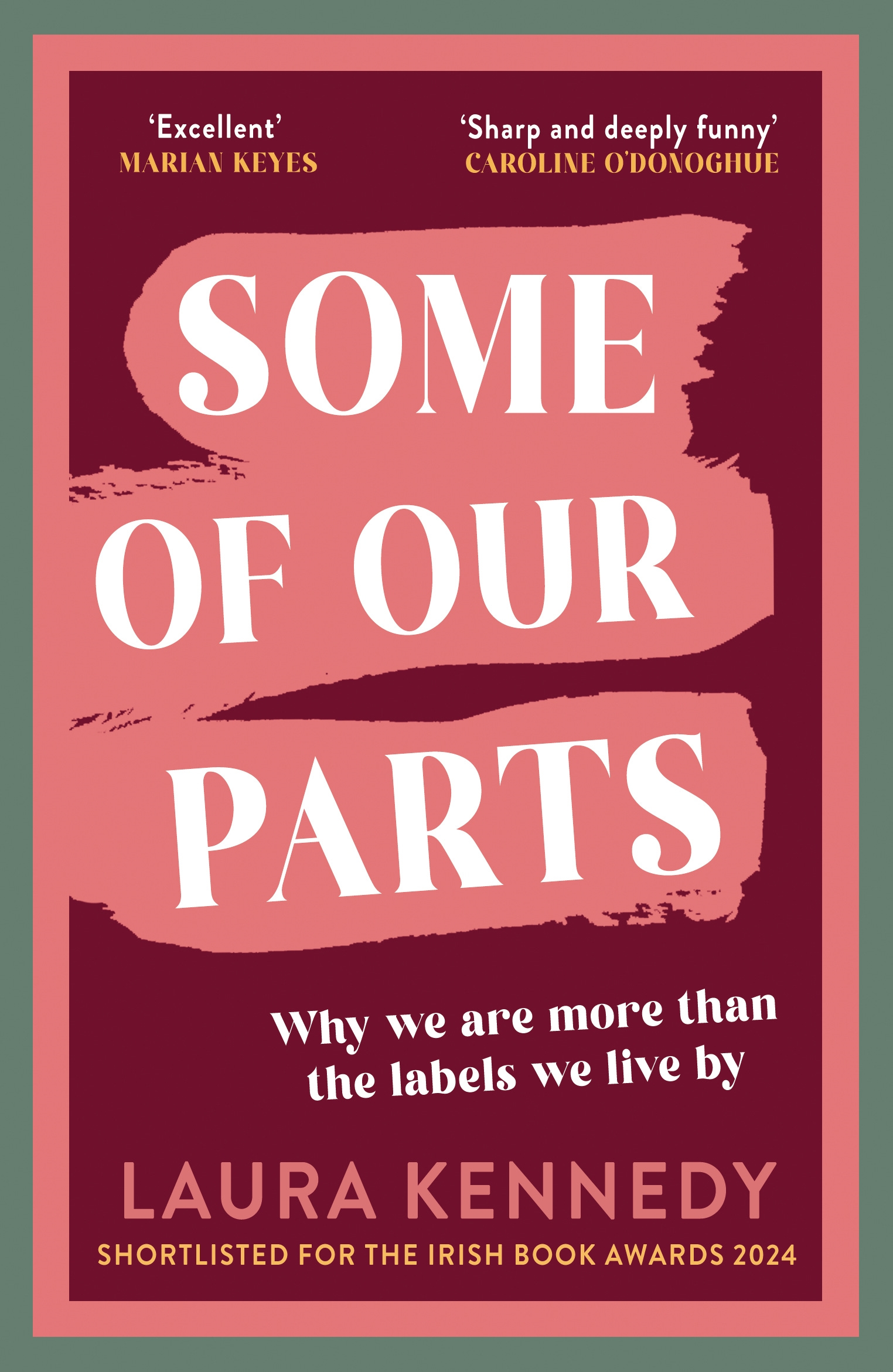
My book, Some Of Our Parts, an identity culture memoir, is out in paperback now.
I relate so strongly to this but could never have articulated it so well. Reading has always been something that offered escape and the depressions where it was impossible were the hardest. It was only reading this that I realised how the restlessness has receded post menopause but that’s not much help to you where you are!
Sitting in such discomfort, trusting it will do me good not to bat it away or run from it. That, is the greatest challenge. Trusting it’s just ‘proof of life’ as you say, rather than something to be instantly fixed.
What a wonderful way to put all of this into words. Thank you